Skincare Texture Guide for Sensitive Skin
Uneven skin texture is frustrating because it looks like one problem but often has several causes. A rough cheek can be dryness. Tiny bumps around the jaw can be congestion. Sandpapery upper arms may behave more like keratosis pilaris. Dullness can be slow surface shedding, but it can also be a tired barrier that needs fewer actives, not more.
The useful rule is simple: choose the mildest texture tool that matches the pattern you can actually see and feel. Sensitive skin usually does better with routine fit than with strength. Our editorial process is explained on our editorial policy, and this guide is written for shoppers who want product direction, not medical diagnosis. If your texture is painful, suddenly inflamed, infected-looking, or linked with a skin condition, treat this as shopping context and speak with a clinician.
This page fits beside our simple skincare routine guide, ingredient decoder, barrier repair shortlist, and beginner retinoids for sensitive skin. Use those pages to keep the rest of the routine calm while you decide whether exfoliation belongs in it.
Why a Skincare Texture Guide Should Start With the Barrier
Texture products are usually sold as exfoliants, peels, resurfacing toners, or smoothing cleansers. The category sounds straightforward, but the barrier decides whether the product is helpful.
The American Academy of Dermatology explains that exfoliation removes dead skin cells from the outer layer of skin, but also warns that it is not for everyone and can cause harm if done incorrectly. It separates mechanical exfoliation, such as scrubs or tools, from chemical exfoliation using ingredients such as alpha and beta hydroxy acids. For sensitive skin, that distinction matters because rubbing can be as irritating as a strong acid.
A barrier-first approach means you check three things before buying:
- Does your skin sting or burn after ordinary products?
- Are you already using retinoids, benzoyl peroxide, or another exfoliating acid?
- Is the texture mixed with tightness, flaking, or redness?
If the answer is yes, the next step is usually moisturiser, sunscreen, and fewer actives for a week or two. Our niacinamide vs ceramides guide can help you decide whether your support step should lean oil-control and redness-calming or richer barrier repair.
Decode the Texture Pattern Before Choosing an Acid
Texture is not one shopping category. These are the common patterns.
Dry, flaky roughness often needs barrier support first. A gentle cleanser, bland moisturiser, and consistent SPF may make the surface feel smoother without exfoliation. Adding acid too early can make flakes look worse.
Dull surface build-up is where a mild AHA or PHA can make sense. Lactic acid and PHA products are often positioned as gentler than stronger glycolic routines, but sensitive skin still needs slow frequency.
Clogged-feeling pores, blackheads, and oily bumps are where BHA has a clearer role. Salicylic acid is oil-soluble, so it is commonly used in products aimed at congestion and visible pores.
Rough, bumpy body texture needs a different lens. DermNet lists moisturising creams with urea, salicylic acid, lactic acid, or alpha hydroxy acids as options that can help loosen adherent scale in keratosis pilaris. That does not make every bump KP, but it explains why body smoothing products often combine exfoliating and moisturising ingredients.
Product Fit Map: Four Texture Routes for Sensitive Skin
| Texture pattern | Ingredient route | Product format | Better fit if | Be careful if |
|---|---|---|---|---|
| Dull, mildly rough face texture | PHA | Leave-on toner | You want the gentlest acid entry point | You already use retinoids nightly |
| Dry dullness with uneven tone | Low-strength lactic acid | Leave-on serum | You want mild AHA smoothing with hydration support | Your barrier is cracked or stinging |
| Oily congestion and blackheads | BHA / salicylic acid | Leave-on liquid | Pores feel clogged and shiny | Skin is very dry, peeling, or salicylate-sensitive |
| Rough body or bumpy feel | Salicylic acid plus ceramides | Rinse-off cleanser | You want a lower-contact smoothing step | You expect a cleanser to replace moisturiser |
Price note: product prices and promotions were checked from official pages on 2026-07-09 and may change. Use the product pages for current pricing before buying.
The INKEY List PHA Toner: Gentle Entry Point for Reactive Texture
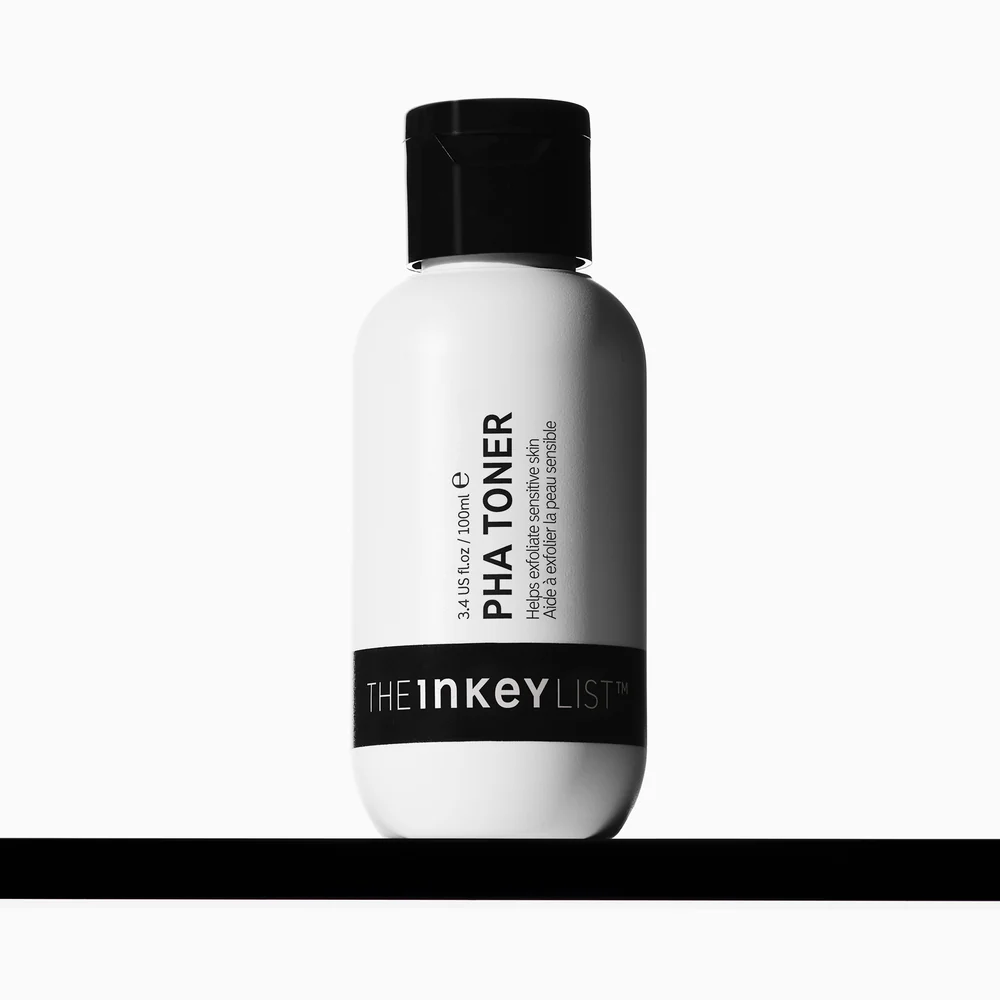
The INKEY List PHA Toner is the most conservative starting point in this guide. The official page describes it as a gentle exfoliating toner for sensitive skin, with 3% PHA, 3% niacinamide, and aloe vera. It targets uneven texture, uneven tone, and dull skin, and the brand advises starting slowly at 1-2 times per week before building frequency.
This is the route to consider if your skin dislikes stronger acids but still feels slightly rough or dull. PHA can be useful because it is positioned as a slower, surface-level exfoliation option rather than a deep pore-clearing treatment. The niacinamide angle also makes routine sense if your texture comes with shine or redness, but do not stack multiple niacinamide products just because the ingredient sounds barrier-friendly.
Routine fit: use after cleansing and before moisturiser, preferably at night at first. Avoid using it in the same routine as retinoids, other acids, or strong vitamin C until you know your tolerance. If you are rebuilding from irritation, start with our barrier repair guide before adding this.
The Ordinary Lactic Acid 5% + HA: Mild AHA for Dullness and Uneven Feel
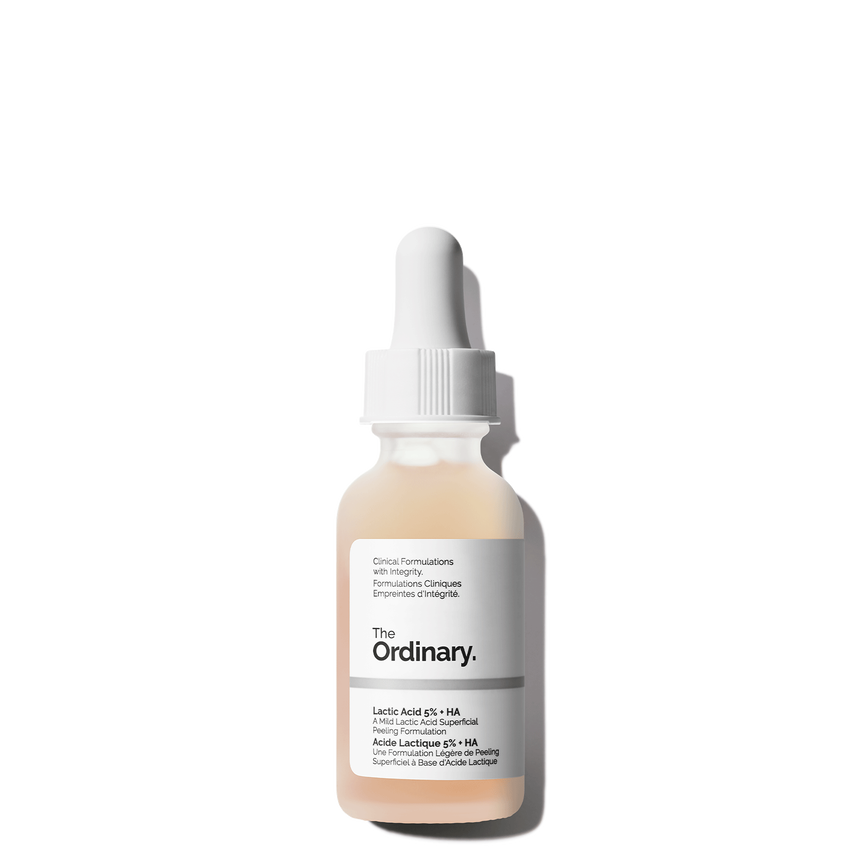
The Ordinary Lactic Acid 5% + HA is a mild AHA serum. The official page lists its targets as textural irregularities, dullness, and uneven skin tone, with lactic acid, sodium hyaluronate crosspolymer, and Tasmannia lanceolata fruit/leaf extract as key ingredients.
This makes sense for someone whose texture is more dull and dry-feeling than oily and congested. Lactic acid is still an acid, so “mild” does not mean casual. The FDA’s AHA page records reports of burning, dermatitis or rash, swelling, peeling, itching, irritation, and increased sunburn from AHA-containing products, and notes research showing increased UV sensitivity after AHA use. That is why this product belongs in a night routine with disciplined SPF the next day.
Routine fit: use once weekly at first, then increase only if the skin stays comfortable. Do not pair it with a new retinoid week, and do not use it on visibly compromised skin. If your main goal is starting retinoids, read our beginner retinoids guide before adding an AHA.
Paula's Choice Skin Perfecting 2% BHA: For Congestion-Led Texture
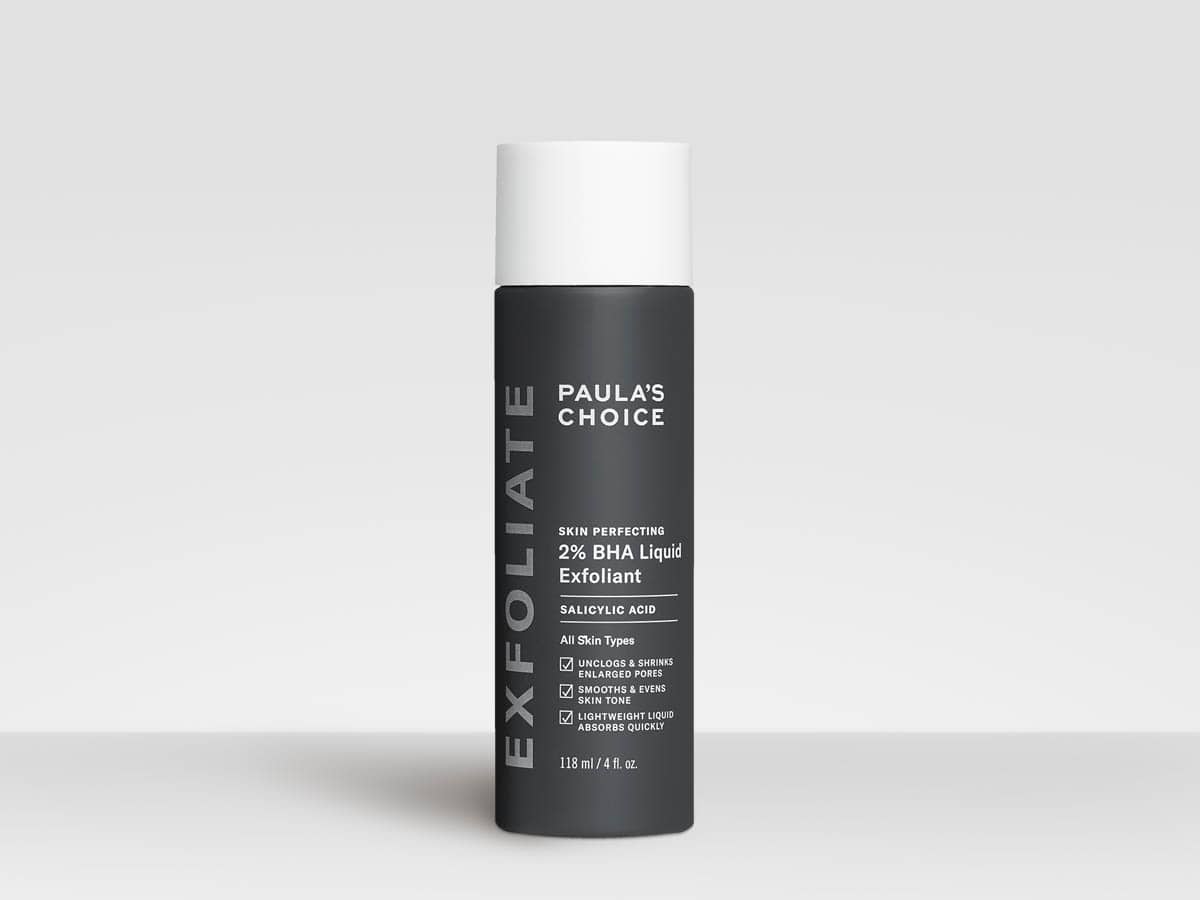
Paula’s Choice Skin Perfecting 2% BHA Liquid Exfoliant is the strongest-feeling decision in this guide. The official page lists salicylic acid 2%, green tea extract, and methylpropanediol, and positions it for breakouts, blackheads, enlarged pores, and dull skin. It also tells users to start every other day, watch the skin response, and follow daytime use with SPF.
This is not the first pick for dry, tight, easily burning skin. It is more relevant when texture is tied to oily congestion, visible blackheads, or pore-lining build-up. If your skin is sensitive but also clog-prone, it may still be useful, but frequency is the product. A low frequency that your skin accepts is better than a theoretically ideal exfoliant that leaves you red and shiny.
Routine fit: use on nights away from retinoids and other acids. Keep the rest of the routine plain. If your skin starts feeling waxy, hot, or unusually tight, pause and rebuild with moisturiser rather than pushing through.
CeraVe SA Smoothing Cleanser: Lower-Contact Option for Rough, Bumpy Feel
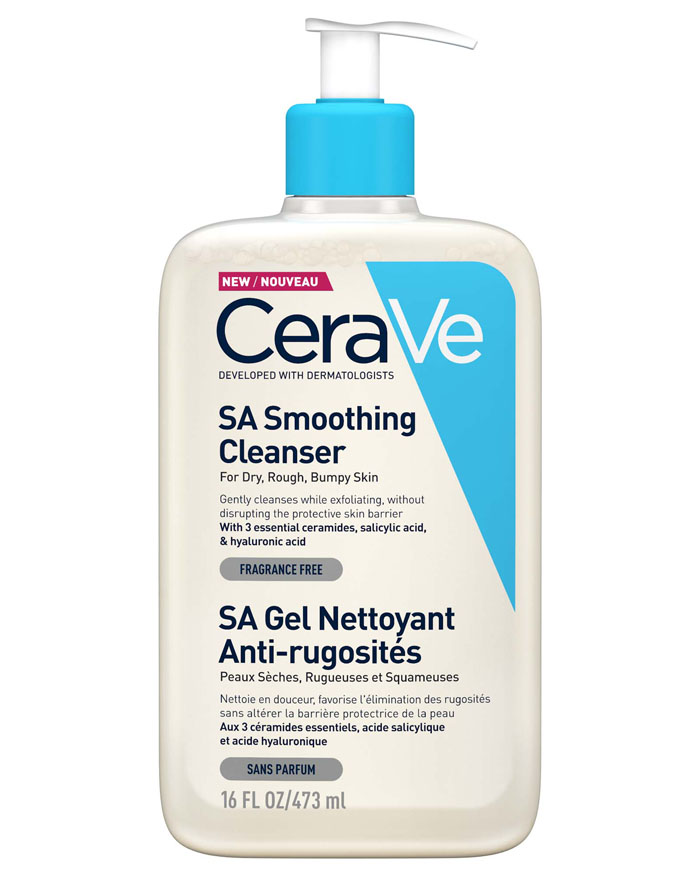
CeraVe SA Smoothing Cleanser is a rinse-off option for rough and bumpy skin texture. The official UK page says the salicylic acid gently exfoliates without compromising the skin’s natural barrier, and lists three essential ceramides plus hyaluronic acid. It is also described as non-comedogenic, allergy tested, and fragrance-free.
A cleanser is a sensible route if you are nervous about leave-on acids or want a body/face wash step for rough-feeling areas. The tradeoff is contact time. A rinse-off cleanser may feel easier to tolerate, but it should not be expected to do the same job as a leave-on exfoliant. It also should not replace moisturiser on dry or bumpy skin.
Routine fit: use with lukewarm water, massage gently, rinse, and moisturise. On the face, do not combine it with a leave-on acid in the same routine until you know your skin’s response. On the body, pair it with a simple moisturiser instead of scrubbing.
A Sensitive-Skin Decision Tree
Choose PHA if your texture is mild, your skin is reactive, and you want the lowest-strength leave-on starting point.
Choose low-strength lactic acid if dullness and uneven feel are the main issue, your skin is not currently stinging, and you can commit to sunscreen.
Choose BHA if the texture is oily, pore-related, or blackhead-prone, and your barrier is stable enough for salicylic acid.
Choose a smoothing cleanser if roughness is body-focused, you want a lower-contact step, or you are already using a leave-on active elsewhere.
Choose barrier repair instead of exfoliation if your face feels tight after cleansing, moisturiser burns, flakes are increasing, or redness is spreading. The right texture product can make skin smoother; the wrong timing can make sensitive skin look polished for two days and irritated for two weeks.
Common Texture Mistakes
The first mistake is treating every bump as dead skin. Some bumps are congestion. Some are irritation. Some are follicular. Some need medical care. A product page cannot diagnose that.
The second mistake is stacking actives: acid toner, retinoid, vitamin C, exfoliating cleanser, and a scrub because each one sounds reasonable alone. Sensitive skin often fails from total load, not from one villain ingredient.
The third mistake is skipping sunscreen. This matters especially with AHA routines. If you are not ready to use SPF consistently, do not start a texture routine that increases sun sensitivity.
The fourth mistake is buying during a sale before checking routine fit. Our skincare deal value check can help you decide whether a discount is worth it or whether it is just encouraging you to overbuy actives.
Affiliate Disclosure and Editorial Scope
Raybould Marketing may earn a commission if you click certain retailer or brand links. That does not change our editorial order: routine fit, ingredient role, irritation risk, barrier context, packaging practicality, and price-per-use come before hype. You can read more about the site on our about page and review standards on our editorial policy.
We did not claim first-hand use of these products. This guide is based on official product information and dermatology-oriented public sources. Formulas, prices, and promotions can change, so check the current product page and packaging before applying.
FAQ
What is the safest way to start a texture product for sensitive skin?
Start with one active, one night per week, and keep cleanser, moisturiser, and sunscreen unchanged. If your skin stays calm for two to three weeks, increase slowly. If it stings, flakes, or feels hot, stop and return to barrier repair before trying again.
Is PHA better than AHA for sensitive skin texture?
PHA is often a gentler starting point because it is used for surface smoothing and can be paired with hydrating ingredients. That does not make it irritation-proof. A low-strength AHA like lactic acid may suit dull, dry-feeling texture, but it needs more caution around sunscreen and frequency.
Should I use BHA for rough skin texture?
Use BHA when the texture feels linked to oil, clogged pores, blackheads, or congestion. If the texture is dry, flaky, or barrier-related, BHA may be too much too soon. A moisturiser-first reset can be the better first step.
Can I use exfoliating acids with retinoids?
Do not start them together. If you already use a retinoid, add acids only on separate nights and at low frequency. If you are new to retinoids, build retinoid tolerance first, then decide whether texture still needs an acid.
How long should I wait before judging results?
Give a gentle texture routine several weeks unless irritation appears sooner. Some products claim faster visible smoothing, but sensitive skin decisions should be based on comfort, consistency, and barrier stability rather than overnight smoothness.
Are scrubs bad for sensitive skin?
Not always, but they are easy to overdo. The AAD separates mechanical exfoliation from chemical exfoliation and recommends choosing based on skin type. For sensitive facial skin, a mild chemical route or no exfoliation may be easier to control than repeated rubbing.
References
- American Academy of Dermatology
- FDA Alpha Hydroxy Acids
- DermNet Keratosis Pilaris
- Paula's Choice Skin Perfecting 2% BHA
- The Ordinary Lactic Acid 5% + HA
- CeraVe SA Smoothing Cleanser
- The INKEY List PHA Toner
Title Candidates
- Skincare Texture Guide for Sensitive Skin: Choose Gentle Exfoliation, Barrier Support, and Realistic Smoothing Without Overdoing Actives
- Rough Skin Texture but Sensitive Skin? A Barrier-First Guide to PHA, Lactic Acid, BHA, and Smoothing Cleansers
- Before You Buy a Texture Toner: 7 Sensitive-Skin Checks That Prevent Over-Exfoliation and Barrier Setbacks
- The Sensitive-Skin Texture Map: When to Choose PHA, AHA, BHA, or a Smoothing Cleanser
- Uneven Skin Texture Without the Burn: A Practical Fit Guide for Sensitive-Skin Skincare Shoppers