Sensitive skin often makes a simple hydration step feel more complicated than it should. A serum can look gentle because it says hyaluronic acid, barrier repair, or calming on the front, then still feel sticky, sting on a compromised barrier, pill under sunscreen, or duplicate ingredients you already use elsewhere.
The useful question is not "which serum is strongest?" It is: which lightweight hydrator gives your skin water-binding support without adding the wrong irritant, texture, or routine clutter? This guide compares five hydrating serums for sensitive skin by humectants, barrier support, niacinamide tolerance, texture, value, and routine fit.
Scope note: this is an editorial product comparison based on published ingredient lists, official brand pages, retailer product data, and dermatology-adjacent sources. We have not run clinical testing, and we do not claim these products treat skin conditions. If your skin is burning, cracked, swollen, or flaring, pause new products and speak with a qualified clinician. You can read more about how Raybould Marketing handles product research on our /editorial-policy/ page and who we are on /about/.
Affiliate disclosure: Raybould Marketing may earn a commission if you buy through some retailer links, at no extra cost to you. Our shortlist is written around fit, ingredients, and value rather than commission rate.
Quick Comparison: Hydrating Serums for Sensitive Skin
| Product | Main hydration support | Barrier-support angle | Niacinamide tolerance | Texture fit | Value note |
|---|---|---|---|---|---|
| CeraVe Hydrating Hyaluronic Acid Serum | Glycerin, sodium hyaluronate, panthenol | Ceramide NP, AP, EOP, cholesterol, dimethicone | No obvious niacinamide in the listed US formula checked | Gel-cream serum, more cushion than watery HA | Good if one product needs to hydrate and support barrier basics |
| BYOMA Hydrating Serum | Glycerin, butylene glycol, squalane | Tri-Ceramide Complex with cholesterol and fatty acids | Niacinamide-free in the official INCI checked | Ultra-light serum, easy under moisturiser | Strong value if you like lightweight barrier support |
| The Ordinary Hyaluronic Acid 2% + B5 | Five forms of HA, panthenol | Ceramides in the newer formula | Niacinamide-free in the product copy checked | Lightweight but can feel tacky if over-applied | Budget-friendly and simple, but needs a moisturiser over it |
| Aveeno Calm + Restore Triple Oat Serum | Glycerin, butylene glycol, silicone humectant feel | Oat flour, oat oil, oat extract, feverfew, dimethicone | Niacinamide-free in the Walmart ingredient list checked | Soft serum-lotion, non-greasy | Best fit when soothing matters more than active strength |
| La Roche-Posay Hyalu B5 Pure Hyaluronic Acid Serum | Glycerin, panthenol, four HA forms | Madecassoside, B5, humectants | Niacinamide-free in the US ingredient list checked | Plumping serum, more sensorial | Check tolerance: the official US INCI lists alcohol denat and fragrance |
Price and formulation freshness note: prices and ingredient lists can change by country and retailer. This article was prepared on 9 July 2026 using the linked source pages. Always check the box or retailer INCI before buying.
How We Chose These Sensitive-Skin Hydrators
For this shortlist, a product had to do more than say "hydrating". We looked for formulas that make sense in a sensitive-skin routine: humectants such as glycerin or hyaluronic acid, barrier-relevant ingredients such as ceramides, cholesterol, fatty acids, panthenol, dimethicone, oat, squalane, or feverfew, and clear enough ingredient information to judge likely fit.
We also weighted texture and routine role. A serum for sensitive skin is rarely a complete routine by itself. The American Academy of Dermatology advises applying moisturiser when skin is still damp and choosing fragrance-free options when dryness and irritation are concerns. That matters because hyaluronic acid and glycerin attract water, while a moisturiser helps reduce water loss and gives the barrier a more complete support layer.
If you are still deciding whether your routine needs a hydrating serum, start with our simple skincare routine for sensitive skin. If your barrier already feels rough, tight, or over-exfoliated, compare these lighter options with our barrier repair skincare picks.
CeraVe Hydrating Hyaluronic Acid Serum: Most Balanced Barrier Support
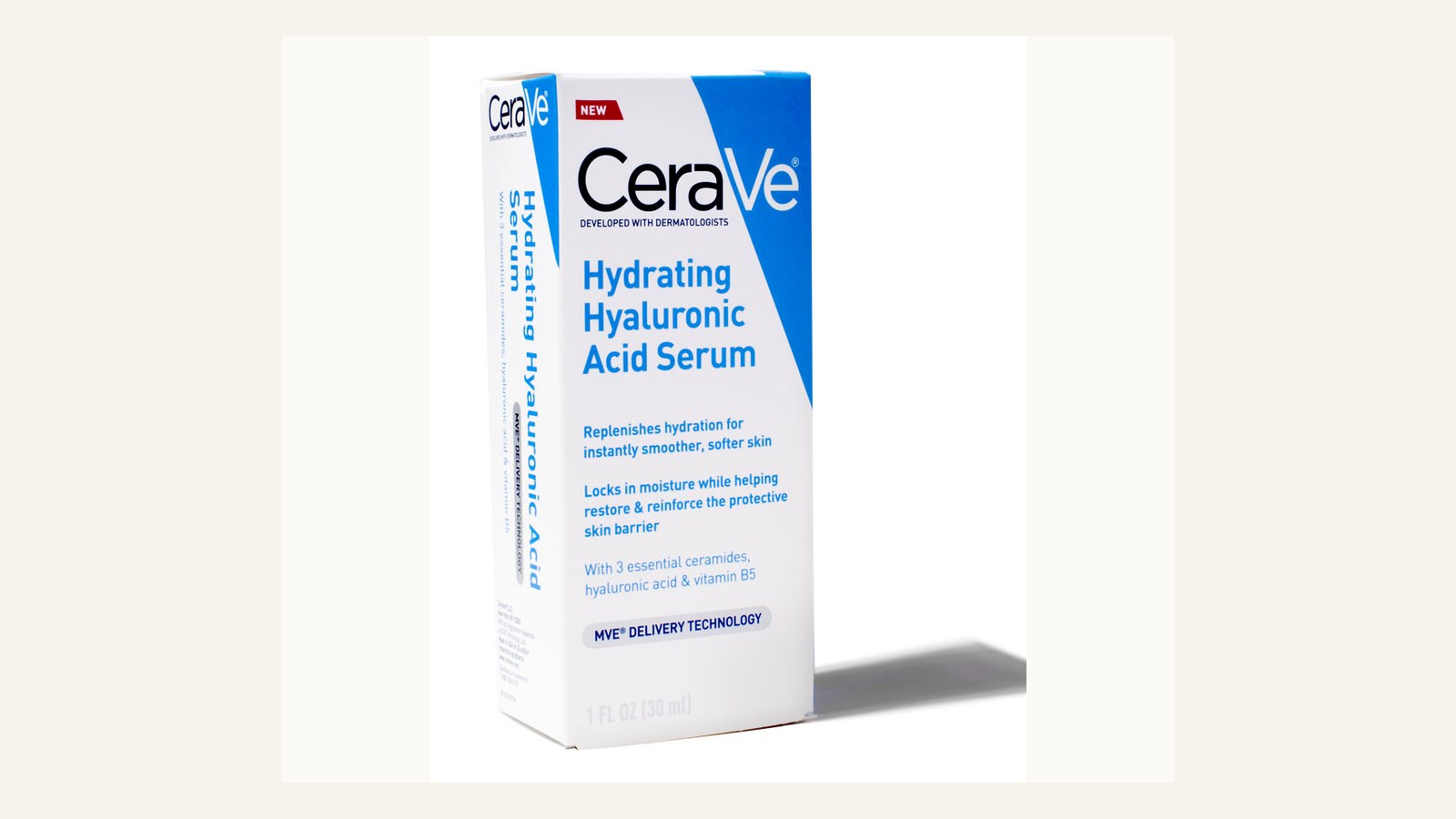
CeraVe Hydrating Hyaluronic Acid Serum is the safest starting point in this group if your sensitive skin needs a familiar barrier-support formula rather than a very active serum. The official CeraVe page lists glycerin, sodium hyaluronate, panthenol, dimethicone, three ceramides, cholesterol, and phytosphingosine, with a fragrance-free and non-comedogenic positioning. That combination makes it feel closer to a light gel-cream than a thin watery serum.
The practical advantage is that it does not rely on hyaluronic acid alone. Glycerin and HA help bind water, panthenol adds a soothing moisturising role, while dimethicone and the lipid blend give it more cushion. For sensitive skin, that matters because a pure HA serum can feel underwhelming if you do not seal it with moisturiser.
The tradeoff is texture. If you want a near-invisible serum under multiple layers, CeraVe may feel more substantial than The Ordinary or BYOMA. That is not a flaw; it is the reason it fits dry, tight, or barrier-stressed skin better than very oily skin. Use it after cleansing and before moisturiser, or skip a separate serum on low-maintenance mornings and treat this as your hydration-support step.
Choose CeraVe if your skin dislikes fragrance, you want ceramides without a complicated routine, and you prefer a serum that behaves a little like a light moisturiser. Skip it if you want the thinnest possible texture.
Source: CeraVe Hydrating Hyaluronic Acid Serum.
BYOMA Hydrating Serum: Lightweight Ceramide Support Without Niacinamide
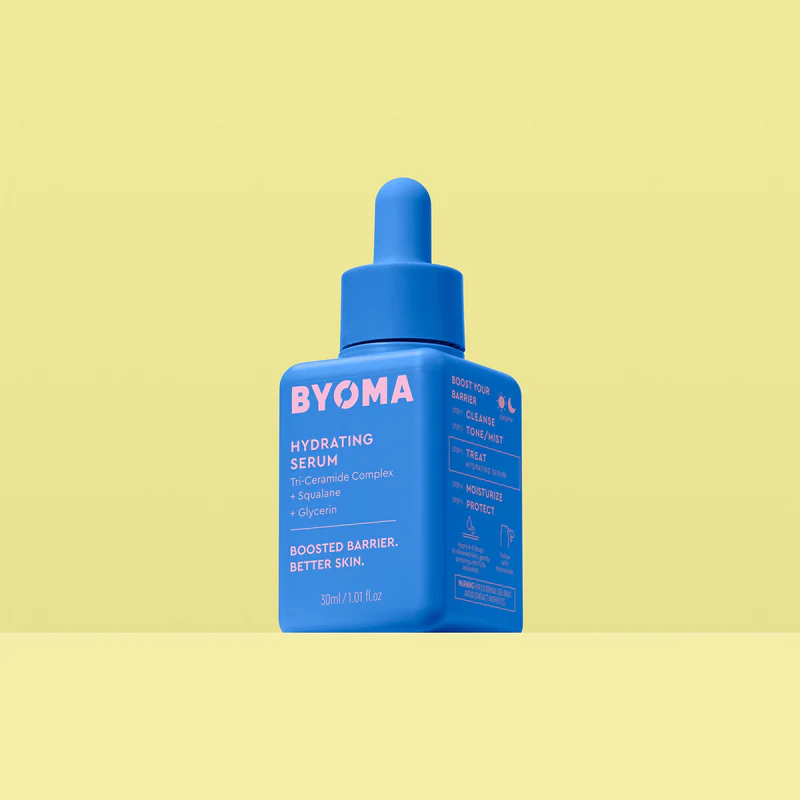
BYOMA Hydrating Serum is the lightest barrier-support pick here. The official BYOMA page lists glycerin, butylene glycol, squalane, ceramide NP, cholesterol, phytosphingosine, fatty-acid-related ingredients, and dipotassium glycyrrhizate. It is described as oil-free, non-comedogenic, alcohol-free, fragrance-free, vegan, and cruelty-free.
For sensitive-skin shoppers, the important point is that BYOMA gives barrier-adjacent support without putting niacinamide at the centre. Niacinamide can be excellent for many people, especially when barrier strength and uneven tone are part of the goal, but some reactive skin dislikes high percentages or too many niacinamide products layered together. If your moisturiser or SPF already contains niacinamide, a niacinamide-free hydrator can keep the routine calmer.
Texture is BYOMA's strongest fit. It works well when you want a serum under moisturiser and sunscreen without a heavy finish. It is also useful for combination sensitive skin that feels dehydrated but breaks out when every step is creamy. The value is strong because the formula gives you humectants, squalane, and a lipid-support story in one relatively affordable bottle.
Choose BYOMA if you want light barrier support, no added fragrance, and a flexible serum under moisturiser. Skip it if your skin needs richer occlusion at night; in that case, a cream from the barrier repair guide will probably matter more.
Source: BYOMA Hydrating Serum.
The Ordinary Hyaluronic Acid 2% + B5: Budget Hydration That Needs Sealing
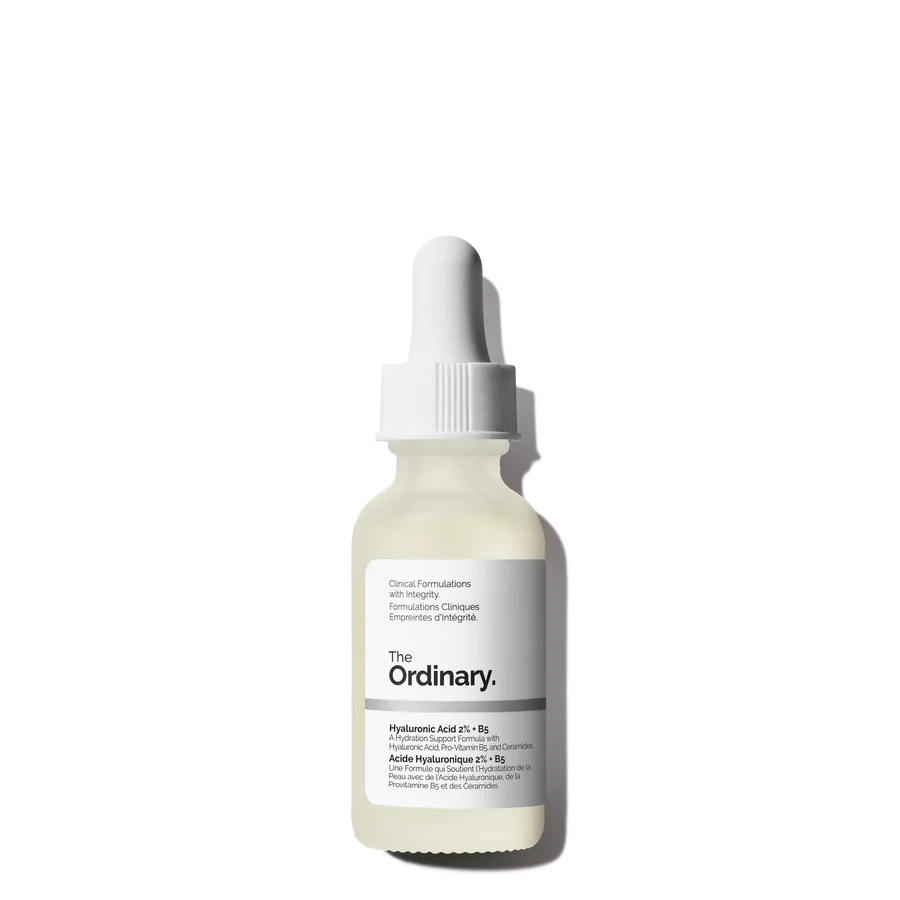
The Ordinary Hyaluronic Acid 2% + B5 is the budget logic pick. Product copy for the newer formula describes five forms of hyaluronic acid, pro-vitamin B5, ceramides, and a lightweight texture. It is not the most comforting product in this shortlist, but it is straightforward, easy to understand, and usually cheaper per routine step than more elaborate hydrating serums.
The main benefit is water-binding hydration. Different forms of HA and panthenol make sense for skin that feels dehydrated, looks crepey from dryness, or needs a simple layer under moisturiser. The formula is also niacinamide-free in the product information checked, so it can fit routines where niacinamide is already coming from a moisturiser, sunscreen, or treatment product.
The caution is user error. Hyaluronic acid serums often disappoint when used too heavily, on completely dry skin, or without moisturiser afterwards. Sensitive skin can also confuse dehydration with barrier damage. If your face feels hot, raw, or stingy, adding more HA may not solve the problem; you may need to simplify the routine and focus on a bland moisturiser.
Choose The Ordinary if value is the priority, you want a no-frills hydration layer, and you are willing to apply it lightly on damp skin before moisturiser. Skip it if tackiness, pilling, or dropper packaging annoys you.
Source: The Ordinary Hyaluronic Acid 2% + B5 product listing.
Aveeno Calm + Restore Triple Oat Serum: Soothing Texture for Reactive Days
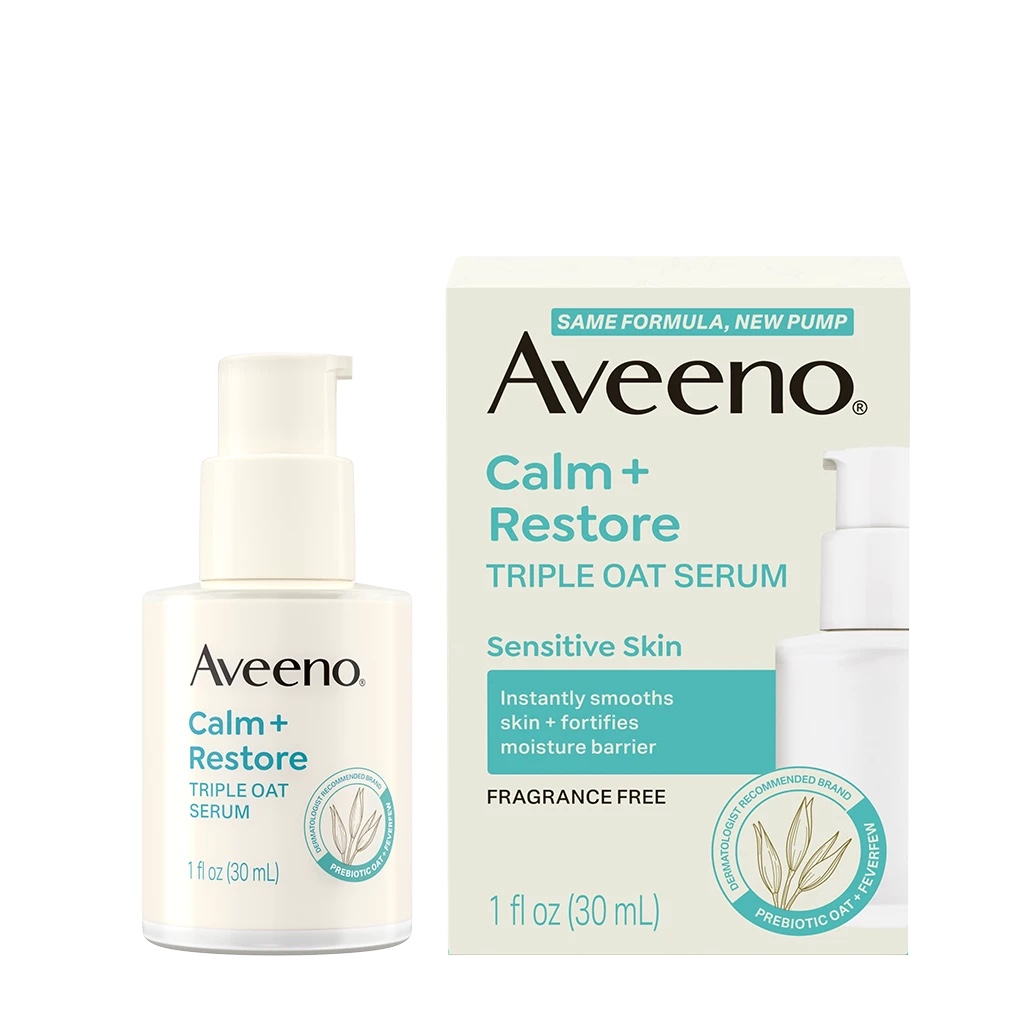
Aveeno Calm + Restore Triple Oat Serum is the soothing pick, especially if your sensitive skin reacts more to weather, cleansing, or overdoing actives than to dryness alone. Walmart's product page lists glycerin, butylene glycol, dimethicone, dimethiconol, feverfew juice, oat kernel flour, oat kernel oil, and oat kernel extract, with fragrance-free, hypoallergenic, and non-comedogenic positioning.
This is not the most ingredient-tech formula, and that is part of the appeal. Oat-led skincare has a long sensitive-skin association, and the serum-lotion texture is likely to feel more comforting than a thin HA dropper if your skin is tight after cleansing. Dimethicone and dimethiconol also help the skin feel smoother without relying on exfoliation.
The main value question is whether you need a serum rather than the matching Aveeno moisturiser. If your routine already has a gentle moisturiser that works, this serum may be a nice-to-have. If you want a soft middle step under a gel cream, it has a clearer purpose.
Choose Aveeno if your priority is a calm, soft, fragrance-free step and you do not need niacinamide or retinoid-adjacent actives. Skip it if you want the lowest price per active ingredient or a very watery texture.
Source: Aveeno Calm + Restore Triple Oat Serum listing.
La Roche-Posay Hyalu B5: Plumping Hydration With a Sensitive-Skin Caveat
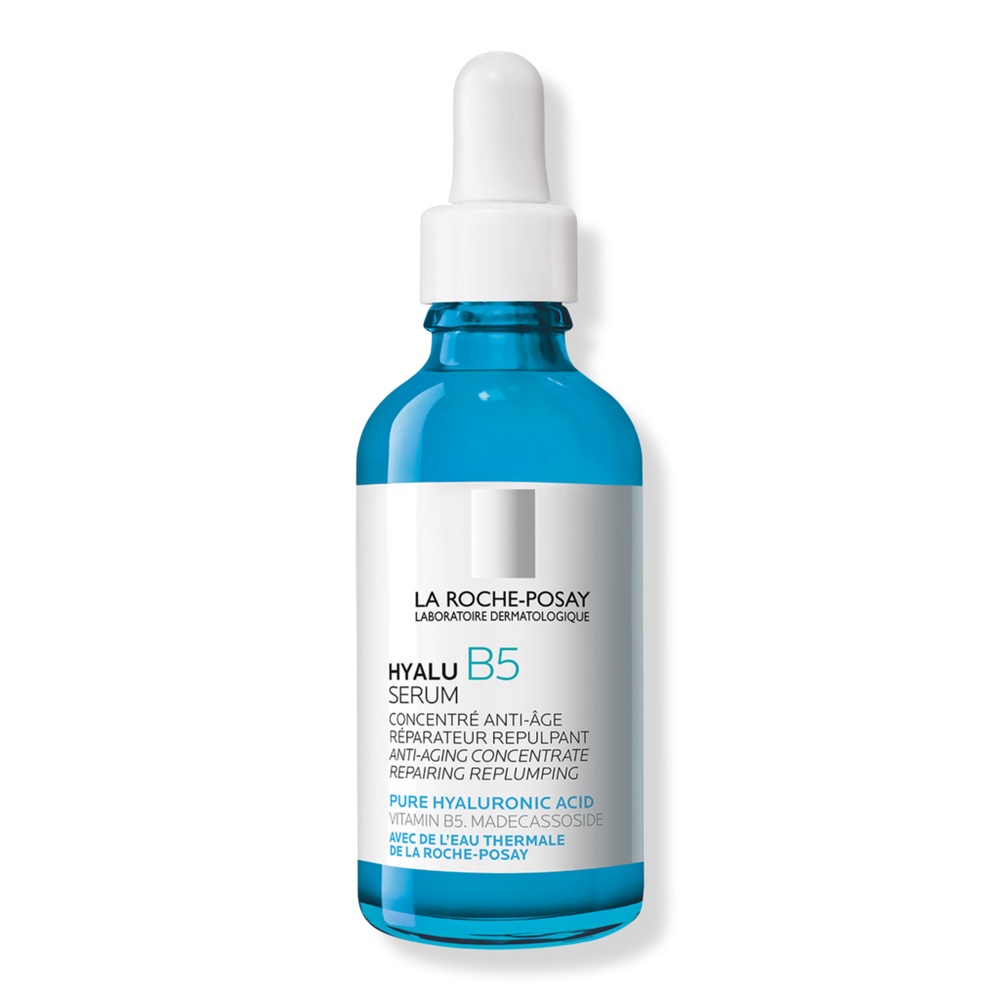
La Roche-Posay Hyalu B5 Pure Hyaluronic Acid Serum is the most nuanced pick here. The official US page positions it for dehydrated and sensitive skin and lists glycerin, panthenol, sodium hyaluronate, hydrolyzed hyaluronic acid, sodium acetylated hyaluronate, madecassoside, and dimethicone. It also lists alcohol denat and fragrance.
That does not make the product automatically unsuitable. Some sensitive-skin shoppers tolerate fragranced dermatology-brand products well, and the product is described as allergy tested and dermatologist tested. But if you already know fragrance stings your skin, or if your barrier is compromised from retinoids or exfoliating acids, this is not the lowest-risk choice in the group.
The texture and finish are more sensorial than The Ordinary. It is a better fit for shoppers who want a plumping HA serum and are willing to pay more for a polished feel. It is a weaker fit for shoppers whose first requirement is fragrance-free minimalism.
Choose La Roche-Posay if your skin tolerates fragrance and you want a more premium-feeling HA + B5 serum. Skip it if your routine goal is strict irritant avoidance. For retinoid users, pair any hydrator with the slower approach in our beginner retinoids for sensitive skin guide.
Source: La Roche-Posay Hyalu B5 Pure Hyaluronic Acid Serum.
Humectants, Ceramides, and Niacinamide: What Matters Most?
Humectants are the hydration grabbers. Glycerin, hyaluronic acid, butylene glycol, propylene glycol, and panthenol help bind water in the upper layers of the skin. A good hydrating serum usually starts here, but humectants alone are not a complete barrier strategy.
Barrier-support ingredients help with comfort and water retention. Ceramides, cholesterol, fatty acids, squalane, dimethicone, panthenol, and oat can make a product feel more useful for sensitive skin than a pure watery HA serum. That is why CeraVe and BYOMA score well for routine fit: they combine hydration with a lipid-support or smoothing story.
Niacinamide is useful, but it is not mandatory. Many sensitive-skin routines already include niacinamide in moisturisers, sunscreens, or barrier creams. If your skin tolerates it, niacinamide can be a good supporting ingredient. If it stings, flushes, or appears in too many steps, choosing a niacinamide-free hydrating serum can reduce noise. For a deeper ingredient decision, read our niacinamide vs ceramides barrier repair comparison and ingredient decoder for sensitive skin.
Routine Fit: Where a Hydrating Serum Goes
A sensitive-skin hydration routine should stay boring on purpose:
- Gentle cleanser or rinse.
- Hydrating serum on slightly damp skin.
- Moisturiser to seal and support the barrier.
- Sunscreen in the morning.
That order matters more than owning several serums. If you use The Ordinary or La Roche-Posay, apply a small amount and follow with moisturiser. If you use CeraVe, BYOMA, or Aveeno, you may find the formula gives more cushion, but most sensitive skin still benefits from a moisturiser on top.
Avoid stacking too many "barrier" products at once. More ceramides, peptides, niacinamide, squalane, and occlusives are not automatically better. If your skin becomes hot, shiny, bumpy, or itchy after adding several repair products, simplify before blaming one ingredient.
Value: Which One Is Worth Buying First?
If you are buying one hydrating serum for sensitive skin, start with your routine gap:
- Choose CeraVe if your skin is dry, tight, and you want fragrance-free ceramide support.
- Choose BYOMA if you want light texture, niacinamide-free barrier support, and good everyday value.
- Choose The Ordinary if budget matters most and you already own a moisturiser that seals well.
- Choose Aveeno if your skin wants a soft, oat-led calming layer more than a classic HA serum.
- Choose La Roche-Posay if you like a polished HA + B5 serum and your skin tolerates fragrance.
For deal timing and bundle judgment, use our skincare deal value check before buying multiples. Sensitive skin is the wrong category for bulk-buying a new formula before you know it works.
FAQ
Are hydrating serums good for sensitive skin?
They can be, if the formula is simple enough for your skin and you seal it with moisturiser. Look for glycerin, hyaluronic acid, panthenol, ceramides, oat, squalane, or dimethicone. Avoid assuming that "hydrating" means irritation-proof.
Is hyaluronic acid always safe for sensitive skin?
Hyaluronic acid is widely used and often well tolerated, but the whole formula matters. Preservatives, fragrance, alcohol, texture agents, and layering habits can affect tolerance. If your skin is reactive, patch test and introduce one new product at a time.
Should sensitive skin avoid niacinamide?
Not always. Many people with sensitive skin tolerate niacinamide well, especially in balanced moisturisers. The issue is over-layering or using a concentration your skin dislikes. If niacinamide stings, choose niacinamide-free hydration and get barrier support from ceramides, panthenol, oat, or squalane instead.
Do I need a serum if I already use moisturiser?
Not necessarily. A serum is useful if your skin feels dehydrated under moisturiser, if you want a lighter daytime layer, or if your moisturiser is rich but not very humectant-heavy. If your current routine keeps skin calm and comfortable, a serum is optional.
Which product should I try first after over-exfoliation?
Pause exfoliating acids and retinoids first. For a cosmetic hydration step, CeraVe, BYOMA, or Aveeno make more sense than a fragrance-containing serum because they focus on fragrance-free barrier support or soothing texture. If skin is painful, cracked, or inflamed, seek medical advice rather than testing new products.
References and Source Notes
- CeraVe Hydrating Hyaluronic Acid Serum
- BYOMA Hydrating Serum
- The Ordinary Hyaluronic Acid 2% + B5 product listing
- La Roche-Posay Hyalu B5 Pure Hyaluronic Acid Serum
- Aveeno Calm + Restore Triple Oat Serum listing
- American Academy of Dermatology dry skin care tips
- Allure discussion of barrier-repair overuse and niacinamide tolerance
Sensitive skin does not need the most dramatic serum. It needs the least confusing product that solves a real routine gap. For most shoppers, that means choosing a hydrator by texture, fragrance tolerance, and barrier-support role before chasing a longer ingredient list.