Affiliate disclosure: This article may contain affiliate links. If you follow a link and make a purchase, the publisher may earn a commission at no extra cost to you.
LetPot Review: What the Merchant's Own Information Says About Its Indoor Gardens
What Is LetPot and What Does It Offer?
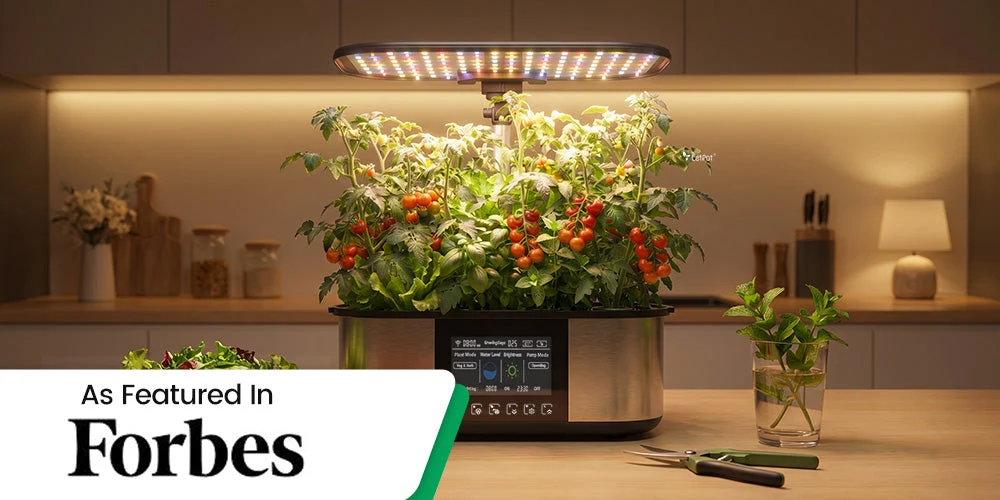
LetPot is an indoor gardening brand that describes its offer as "a smart, open indoor garden that brings the joy of growing into every home." That is the company's own positioning, and this guide treats it as such. Everything below draws on LetPot's public website and two posts on its own blog. We have not tested any LetPot product, and nothing here should be read as independent verification.
The catalogue is organised into several areas. Hydroponics is the core, split into hydroponic gardens, sponges and nutrients, and accessories and replacements. Alongside it sit a watering system, a range of grow lights and a seed starter. A buyer could start with one of the gardens and add lights, nutrients or monitoring tools from the same brand.
Whether LetPot belongs on your shortlist depends on how much you value an open approach to seeds and consumables, how much space you have, and how comfortable you are relying on manufacturer-published information. The sections that follow set out what the evidence supports, where it runs out, and what to check before you spend any money.
Shop LetPot Review: What the Merchant's Own Information Says About Its Indoor Gardens →
LetPot Hydroponic Garden Lineup
AI-generated generic editorial illustration — not a retailer product photo and does not depict the reviewed product or service. Give a quick visual comparison of the LetPot garden models by pod capacity, with the newer 2-tier garden noted separately.
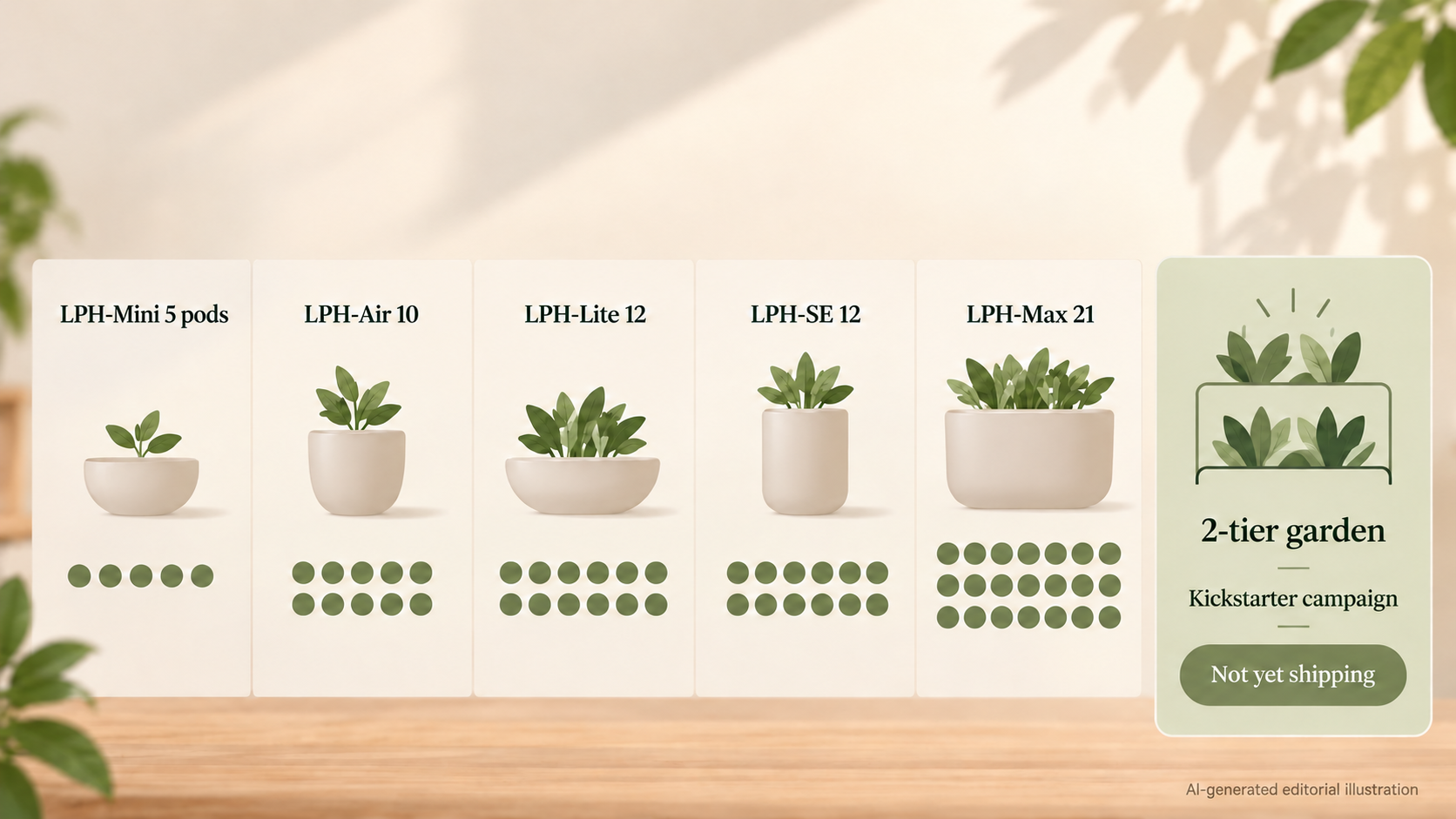
LetPot's public navigation lists five hydroponic gardens, named by pod count:
- LPH-Max: 21 pods
- LPH-SE: 12 pods
- LPH-Lite: 12 pods
- LPH-Air: 10 pods
- LPH-Mini: 5 pods
Capacity is the clearest difference visible from the naming alone. The two 12-pod models, the LPH-SE and the LPH-Lite, share a pod count, and the public listing we reviewed does not explain how they differ. Dimensions, lighting, wattage, app features and price all need to be checked on the individual product pages. We have not verified any of them.
The homepage also promotes a "Brand New 2-Tier Garden", shown as live on Kickstarter. The banner describes two grow zones, a nutrient check, 32 plants and a bamboo style, and says the garden is easy to set up and clean. Because this is a crowdfunding campaign, it is best treated as separate from the five listed models rather than as a product you can simply order and expect to arrive. Read the campaign terms carefully before pledging.
Where LetPot Looks Strong
The best-supported argument for LetPot is its open approach to growing. According to a post on LetPot's own blog, WIRED contributor Kat Merck tested the LPH-SE hydroponic garden, the GL100 grow light and the SS-Pro smart seed starter for a gift recommendations article. We have not read the WIRED piece itself, so what follows is LetPot's summary of it.
In that summary, the LPH-SE lets users grow their own seeds without proprietary pods, using standard baskets and grow sponges instead. The reviewer is also reported to have grown leafy greens in the 12-pod system over several months. The blog post goes further and calls the performance reliable and the design beginner-friendly. Those are the merchant's characterisations, and we have not verified them.
The brand's own pitch adds a few more points in its favour:
- App control and LED grow lights are presented as part of the smart garden proposition.
- The range runs from 5 to 21 pods, with lights, a seed starter and a watering system sold in the same catalogue.
- Consumables and accessories are listed separately from the gardens, which suggests parts can be added or replaced without buying a whole new unit.
That last point is our reading of the catalogue layout, not a documented policy, so confirm what is replaceable on each product page.
Open Pod System and Running Costs
LetPot sells its own consumables alongside the open approach. The catalogue lists a 172-piece replacement pod kit, a 200-piece grow sponge pack and an A/B nutrient solution. A buyer should therefore expect some ongoing spend rather than a one-off purchase.
The open design matters here. LetPot's blog says the LPH-SE works with standard baskets and grow sponges, so users can grow seeds of their own choosing rather than being tied to proprietary pods. That flexibility is the main trade-off to weigh. You gain freedom over what you plant, but you take on the work of sowing and managing your own seeds, and you will still need sponges and nutrients to do it.
What we cannot tell you is the total running cost. It will depend on which seeds you choose, how much nutrient solution you use and what you pay for electricity, and none of the evidence quantifies any of those. Before buying, price the consumables you would actually use and compare them with what other indoor garden brands charge for theirs.
Nutrient Monitoring with the LetPot EC Meter
LetPot also sells a Smart EC Meter, listed under accessories and replacements. Electrical conductivity (EC) is a common way for hydroponic growers to gauge how concentrated the nutrients in their water are. LetPot says the meter measures EC and water temperature.
LetPot's blog carries a review of it, written from the perspective of a hydroponic hobbyist who says they have spent a few years experimenting in a small apartment. They used the meter for a couple of weeks. The author says they previously relied on visual cues and rough estimates when feeding plants, and came to suspect that inconsistent nutrient levels were leading to slower growth and occasional nutrient burn. Measuring EC was their way of replacing guesswork with a number.
How much weight should that carry? Not a great deal. The post is hosted on LetPot's own site, is published under the LetPot team's name and covers only a short period of use. It makes no claim about long-term accuracy and is not lab validation. It is best read as a description of how one grower used the tool.
The homepage also advertised a free EC meter on orders of $300 or more. If your basket is likely to reach that level anyway, that is a low-risk way to try one. If not, decide based on whether you would really check nutrient levels regularly.
Limitations and Gaps in the Evidence
It helps to be plain about what this material cannot show you.
- First-party sources. Both the WIRED summary and the EC meter review are published on LetPot's own site. They are the merchant's presentation of events, not independent assessments.
- No independent measurements. The article does not provide independent figures for yield, noise, energy use or app reliability, and none of the sources we used supply them.
- No verified model specifications. Pricing, dimensions, wattage and warranty terms for each model were not part of the evidence, so none are stated here.
- Crowdfunding risk. The 2-tier garden is on Kickstarter. Delivery timing and final specifications carry the usual risks of a campaign and may differ from the promotional banner.
- Results depend on the grower. Plant outcomes depend on care, light exposure and watering consistency. A positive account from one reviewer does not guarantee the same result in your home.
- No health claims. Nothing here supports claims about the nutritional or health value of produce grown in any of these systems.
If you have questions that the product pages do not answer, LetPot's support and contact pages are the right place to put them before you order.
Who LetPot Suits and Who Should Look Elsewhere
The five-pod to 21-pod range suggests options running from small spaces to larger households. The LPH-Mini sits at the compact end and the LPH-Max at the other. Which of those fits you depends on your counter or shelf space and how much you want to harvest.
Based on the evidence, the clearest fit is the grower who likes choosing their own seeds. The open approach described for the LPH-SE, with standard baskets and grow sponges, is the main point that sets LetPot apart in the material we reviewed. The reported results involve leafy greens, so people who mainly want salad crops are the best-matched audience on this evidence.
You may want to look further if:
- You want independent test data. This guide cannot supply it, and the sources we used are largely LetPot's own.
- You need large fruiting crops. The evidence only mentions leafy greens, so verify suitability with LetPot before buying.
- You want a system that is fully proven and shipping today. The 2-tier garden is still a Kickstarter project.
Shop LetPot Review: What the Merchant's Own Information Says About Its Indoor Gardens →
How to Choose Between LetPot Models
Start with the basics and work outwards.
- Pod count. This is the first filter. Think about how many plants you want growing at once and how many people you are feeding. The range runs from 5 pods on the LPH-Mini to 21 on the LPH-Max, with 10 on the LPH-Air and 12 on both the LPH-SE and LPH-Lite.
- Available space. A bigger garden needs more room. Confirm the dimensions on the product page against the spot you have in mind.
- Add-ons. The accessories collection lists a trellis stand, a light panel, a cycling pump and a power adapter, all sold separately from the gardens. The EC meter sits in the same group. Add these to your budget from the start.
- Budget. Compare the garden price with the likely cost of sponges, pods and nutrients over a season.
Finally, check each product page for dimensions, wattage and warranty. Those details were not in the evidence we reviewed. If two models look close, such as the LPH-SE and LPH-Lite, put their listings side by side and ask LetPot support what separates them.
Offers, Shipping and Buying Timing
When the homepage was captured, LetPot was advertising a Super Early Bird saving of $201 on the new 2-tier garden. The banner also listed free shipping on orders over $29 USD and a free EC meter on orders of $300 or more.
Promotions like these change. The Super Early Bird price in particular is tied to a Kickstarter campaign and may already have ended or moved on by the time you read this. Confirm current terms on the homepage and at checkout before you plan a purchase around any of them. If you are not in a hurry, it costs nothing to watch the offers banner for a while.
Comparing LetPot with Practical Alternatives
This guide contains no evidence about competing brands, so it cannot tell you how LetPot stacks up against them. What it can offer is a checklist of things worth comparing:
- Pod openness. Can you use your own seeds, baskets and sponges, or are you tied to the maker's pods? This is the main differentiator the evidence supports for LetPot.
- Capacity. How many plants does each model hold, and does that match your space?
- App features. Is app control included, and what does it actually do?
- Light quality. What kind of lighting is built in, and can it be upgraded or replaced?
- Consumable cost. What do sponges, pods and nutrients cost over time?
- Support. How easy is it to get help, spares and warranty service?
Seek independent reviews for every product on your list, including LetPot, rather than relying on any one brand's own pages. The LetPot hydroponics collection is a sensible place to begin if you want to see the full catalogue before drawing up that comparison.
Frequently Asked Questions
Does LetPot require proprietary pods?
Not for the LPH-SE, according to LetPot's blog. It says the garden lets users grow their own seeds using standard baskets and grow sponges instead of proprietary pods. LetPot also sells its own replacement pod kit, so branded pods exist as an option. We have not checked how this applies to every other model, so confirm it on the relevant product page.
Which LetPot garden did WIRED reportedly test?
LetPot's blog says WIRED contributor Kat Merck tested the 12-pod LPH-SE hydroponic garden, along with the GL100 grow light and the SS-Pro smart seed starter. This comes from LetPot's own summary and we have not read the WIRED article. The blog says the reviewer grew leafy greens in the LPH-SE over several months.
Do I need an EC meter for a LetPot garden?
The evidence does not say that one is required. LetPot sells a Smart EC Meter that measures electrical conductivity and water temperature, and a hobbyist write-up on its blog describes using it to monitor nutrient levels rather than relying on visual cues. That write-up is first-party and covers only a couple of weeks. Whether the meter is worth it depends on how closely you want to track nutrients. LetPot's homepage also listed a free EC meter on orders of $300 or more.
Is the new 2-tier LetPot garden available now?
The homepage described it as live on Kickstarter, which means it is a crowdfunding campaign rather than a standard shop listing. It was promoted with two grow zones, a nutrient check, 32 plants and a bamboo style. Delivery and final specifications carry crowdfunding risk, so read the campaign terms and check for updates before pledging.
Sources
Editorial information: About our editorial team · Read our editorial policy · Read our affiliate disclosure.
Shop LetPot Review: What the Merchant's Own Information Says About Its Indoor Gardens →